Water-damaged drywall repair in Menomonee Falls
Fix the leak first. Then we fix what the leak did.
Get a free estimate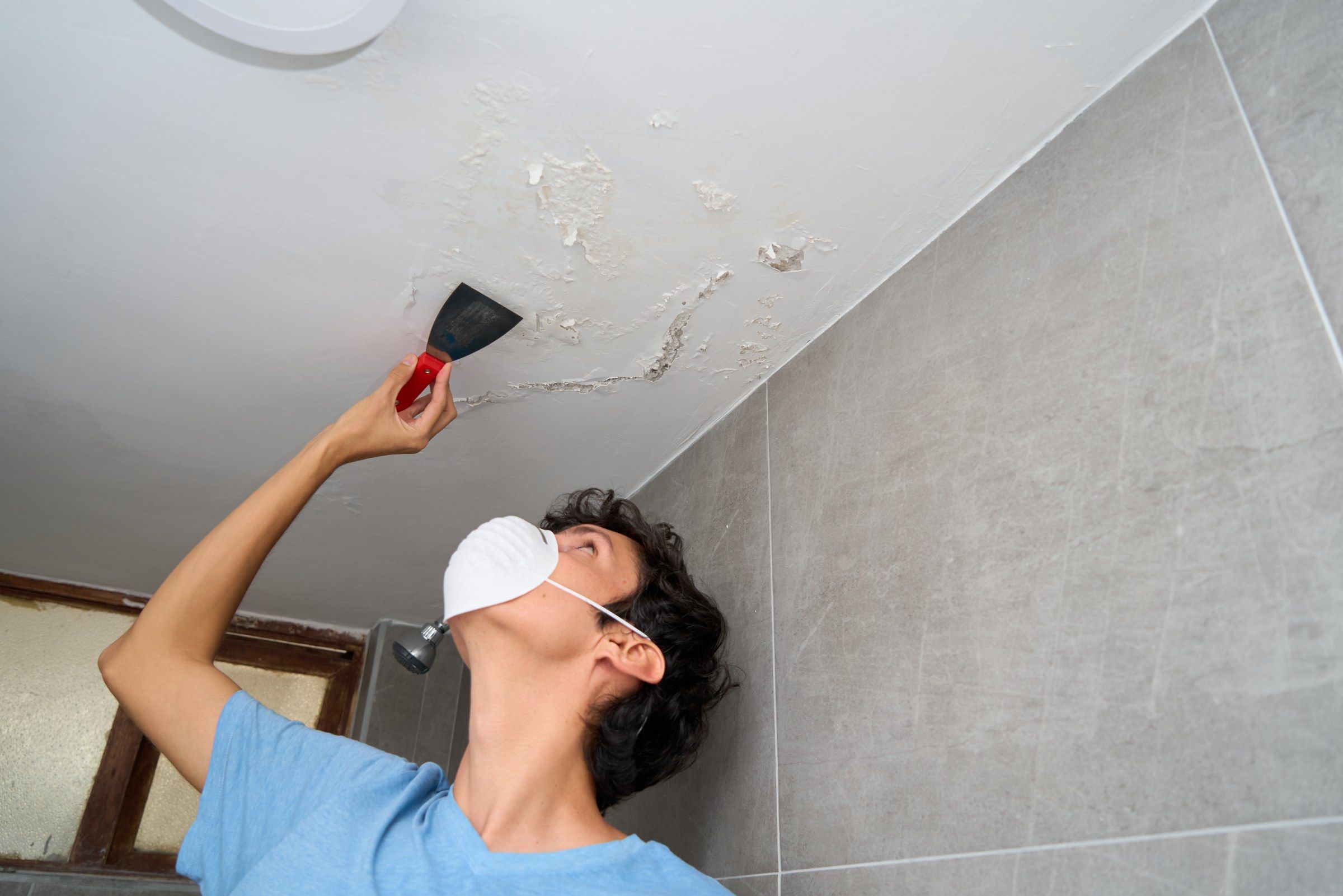
The short of it
Wet drywall is finished drywall. It swells, softens and grows mold if it stays damp. Painting over it does nothing useful.
The fix has an order. Stop the water. Remove what got wet. Dry what is behind it. Put new board up. Skip a step and you will be doing it again.
Replace or seal
If the drywall is still hard and flat and dried within a day or two, it can often stay. A stain-blocking primer and a coat of paint will handle it.
If it is soft, sagging, crumbling or smells, it comes out. We use a moisture meter to find the edge of the damage, because the stain only shows part of it.
Usual causes
Roof leak or ice dam
Stains near outside walls.
Plumbing above
Bathroom over the kitchen is the classic.
Appliance failure
Water heater, washer, dishwasher.
Basement water
Bottom of the walls soaked.
Burst pipe
After a hard freeze.
Sequence
Confirm the leak is fixed
By a plumber or roofer.
Meter the area
Find where wet ends.
Cut out
Drywall and wet insulation.
Dry
Fans and time.
Rebuild
Board, tape, finish, stain-block.
What goes back
Same thickness as before. In bathrooms and basements, we upgrade to mold-resistant board. In a basement, the new board stops half an inch above the floor.
Any stain left on surrounding drywall gets a stain-blocking primer. Regular primer will not stop a water stain from bleeding back.
Why do it properly
No trapped moisture
The wall is opened and dried.
No mold surprise
You see what is in there.
No returning stain
Sealed before paint.
Itemized estimate
For your insurance claim.
What the estimate lists
Water jobs have unknowns. A good estimate separates what is known from what is not.
Area to remove
Measured from moisture readings, not from the stain. Given as a size with a note that it may grow once the wall is open.
Insulation
Whether wet insulation is expected, and replacement if so.
Drying
Whether the cavity needs to stay open to dry, and for roughly how long.
Rebuild
New board, tape, three coats, sanding.
Finish match
Texture matching and stain-blocking primer on adjacent marks.
Not included
Fixing the leak itself. Mold remediation beyond removing the affected board. Painting.
If you are filing an insurance claim, this is the document the adjuster will want. We write it in plain terms with measurements so it can be read by someone who has not seen the wall.
How the days run
Assess
Moisture meter on the wall and the surrounding area. The wet zone is marked. Source confirmed as fixed, or flagged as still unknown.
Open up
Wet board is cut out back to dry material. Wet insulation is bagged and removed. Framing is checked for staining and mold.
Dry
Fans and a dehumidifier run until the framing reads normal. This can be two days or a week. Nothing gets closed until it does.
Rebuild
New insulation, new board, tape and first coat.
Finish
Second and third coats on following days. Sand. Match texture.
Seal
Stain-blocking primer on any marks left on surrounding surfaces. Ready for paint.
The drying stage is the one people want to skip. It is also the one that decides whether the repair lasts.
What we need from you
The leak stopped. This comes before anything else. If you know the source and it has been repaired, tell us what it was and when. If you are not sure, tell us that. We can open the wall and help find it, but we will not close it until it is found.
Photos taken before anything is disturbed, if you intend to make an insurance claim. Include the stain, the surrounding area and anything damaged below it.
Air movement. A fan on the area and a dehumidifier in the room, starting as soon as you find the damage. The sooner drying starts, the less board has to come out.
Clear floor below and around the damage. For a ceiling, that means the whole area underneath.
What can change the plan
How far the water went. The estimate is based on meter readings from the room side. Once the board is off, the wet area sometimes turns out larger, mostly where water ran along a joist or pooled on a plate. We show you and adjust the scope before continuing.
Mold. A small amount on the back of the removed board is common and leaves with the board. If the framing or a wide area is affected, the job pauses. That work belongs to a remediation contractor, and the wall is rebuilt once they have finished.
Drying time. Framing that reads wet stays open. In a basement in humid weather this can add several days. We check with the meter and close the wall when the numbers say so.
A second leak. Now and then a repaired source turns out to be one of two. If the cavity is still getting wet while open, you will know before any new board goes on.
Mistakes we see with water damage
Covering the stain
Paint or primer over damp board traps the moisture. It bubbles and peels.
Cutting only the stained part
The board around a stain is often damp as well. Cut to dry material.
Leaving wet insulation
It holds water against the framing for weeks.
Closing up fast
New board over damp studs will stain or grow mold from the back.
After we leave
Prime the new board. Use a stain-blocking primer on any old marks nearby, or they will bleed through the paint. Then paint the wall or ceiling as a whole.
Watch the area through the next heavy rain or the next few weeks of normal use. If nothing reappears, the source was fixed. If a mark returns, call straight away. It will be a small job if it is caught early.
Notes from the job
Ceilings under bathrooms are the most common call. The usual sources are the tub or shower drain, the overflow, the toilet seal and the supply lines. A plumber can normally test each one in a short visit. If the ceiling below is already stained, cutting a small inspection opening often makes the test quicker and the answer certain.
Ice dams cause a particular kind of damage. Water backs up under the shingles at the eaves and comes in along the top of the outside walls, often in several rooms at once. The stains appear in late winter. The drywall repair is simple once things dry out. The roof and attic insulation need attention before the next winter, or it will happen again.
Basement water marks along the bottom of a wall mean water was on the floor. Cutting out the bottom foot or two of board, drying the plate, and replacing it is a standard repair. If it has happened more than once, consider leaving that lower section finished in a material that tolerates water.
Insulation matters more than people think. Wet fiberglass does not dry inside a closed wall. It holds water against the studs and the back of the new board. If insulation got wet, it comes out.
Access panels are cheap insurance. Behind a tub valve, at a cleanout, at a shutoff. If the leak came from something that may need service again, we fit a panel in place of solid board.
Keep a record. Date, source, what was repaired, who did it. If a stain returns, that record tells you at once whether it is the same problem.
Before and after
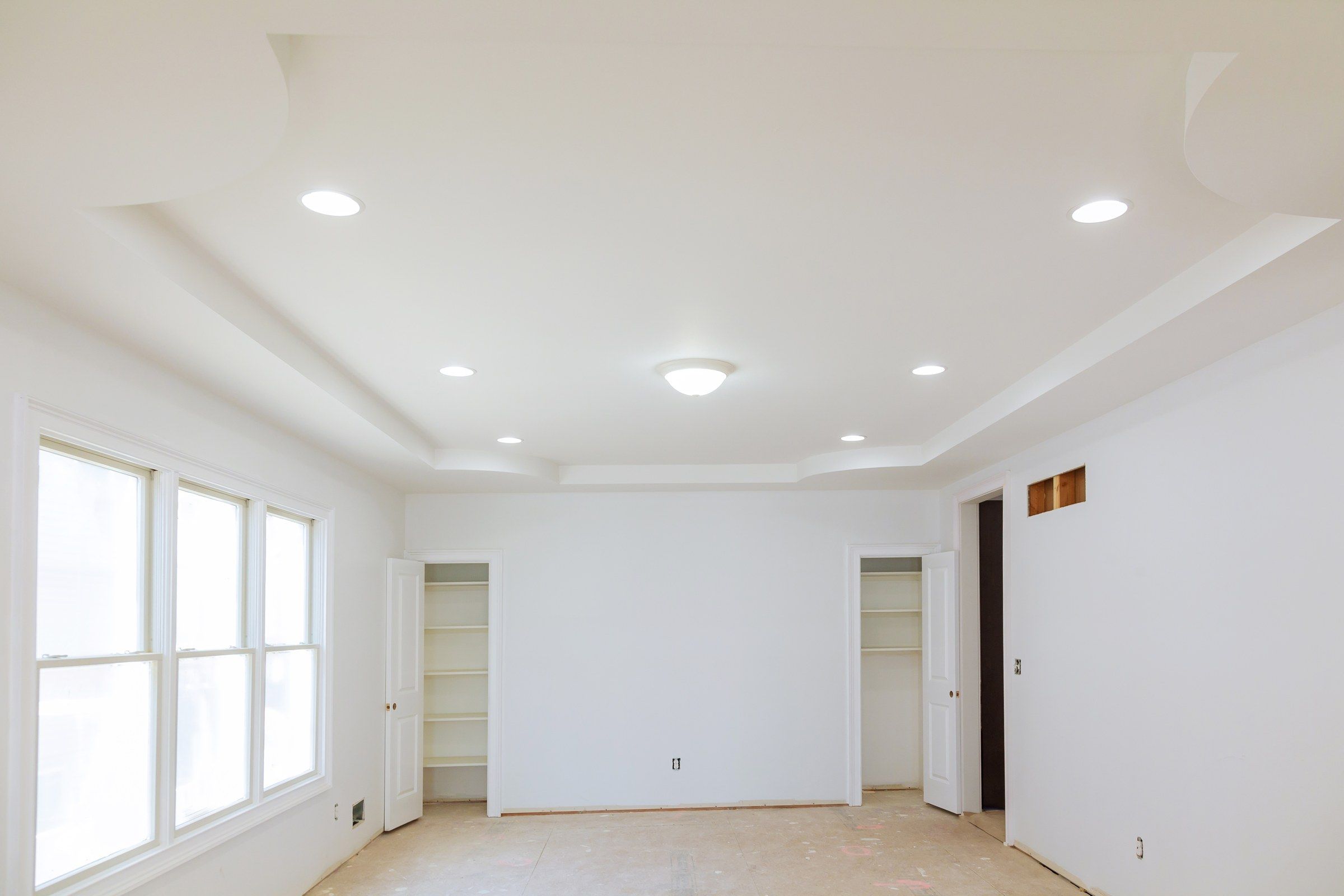
Stock photos, shown to illustrate the result. Not one of our jobs.
Water in the Falls
The Menomonee River runs through the village and some neighborhoods sit low. Heavy spring rain puts sump pumps to work, and a pump that fails means wet basement walls by morning.
In winter it is ice dams and frozen pipes. Both are routine here and both end with drywall coming out.
Questions
How fast do I need to act?
Fast. Mold can start within a couple of days on wet drywall.
Do you remove mold?
Small surface patches, yes. Anything extensive goes to a remediation company.
Will you write up an estimate for insurance?
Yes, itemized, with photos.
Can you repair just the stained spot?
If the damage ends there. The meter decides, not the stain.
Do you fix the leak?
No. Roofer or plumber first, then us.
Need a price on water-damaged drywall repair?
Send the details. You get a written estimate back, free.